
How Ajay Rajendran Built Meraki Group in Dubai
July 11, 2026
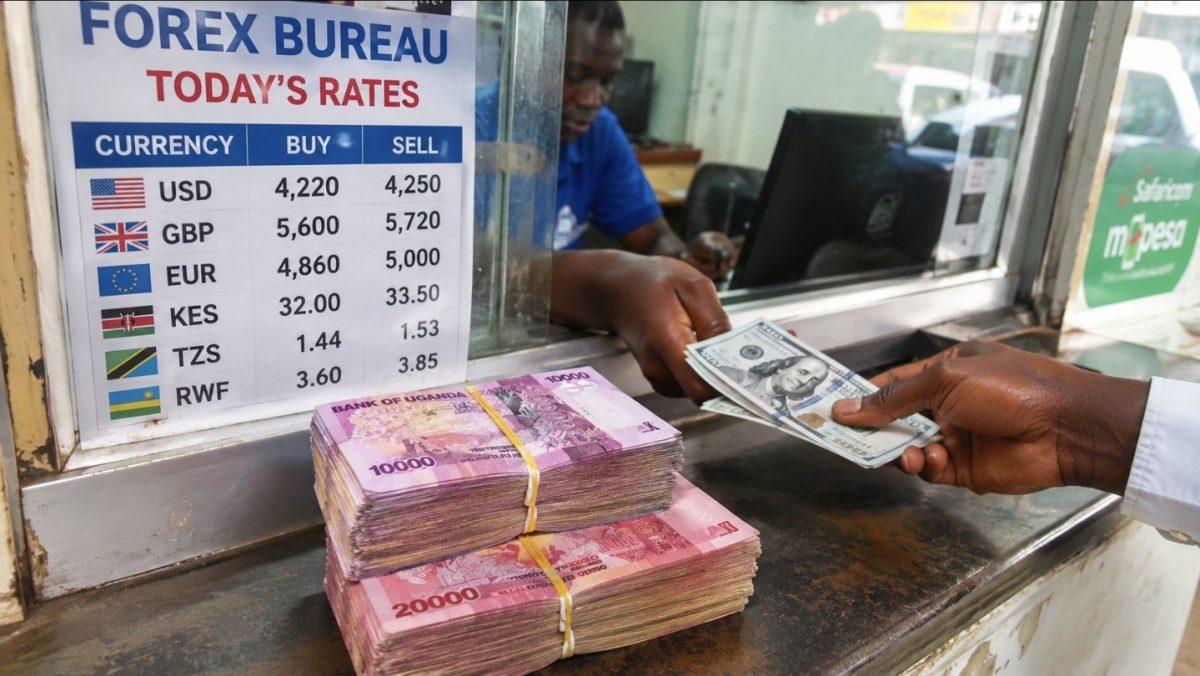
As Uganda’s currency loses ground against the US dollar, questions are emerging about whether the recently enacted Protection of Sovereignty Act has unsettled investors. The answer is more complicated than the political debate suggests, exposing deeper vulnerabilities in the country’s economy and raising important questions about market confidence.
For many Ugandans, the weakening shilling has become more than another economic headline. It is increasingly visible in the cost of doing business, the price of imported goods and the amount of money required to meet everyday financial obligations.
A business importing merchandise from Dubai or China must now find substantially more shillings to settle the same dollar-denominated invoice. Fuel distributors face higher costs, manufacturers are paying more for imported materials, and companies with foreign-currency obligations are having to reconsider their budgets.
The numbers illustrate the pressure.
At the end of December 2025, one US dollar was worth approximately Shs3,614.50. By October 30, 2026, the exchange rate had reached around Shs4,245, according to Reuters. A payment of $1,000 that previously required about Shs3.61 million would now cost Shs4.25 million, excluding transaction charges.
That difference matters to businesses operating on narrow margins. It matters just as much to families whose incomes have not increased alongside the cost of living.
Uganda’s annual inflation rate reached 5.8 percent in October, its highest level in more than three years, with food inflation rising to 10.7 percent.
Against this background, one question has become particularly relevant: to what extent has Uganda’s Protection of Sovereignty Act, 2026, contributed to the shilling’s depreciation?
It is a legitimate question, especially given that the Bank of Uganda itself raised concerns about the legislation before Parliament passed it.
But establishing whether the law has actually weakened the currency requires more than observing that the shilling has fallen since its enactment.
It requires examining what changed in the legislation, how investors have responded and what else has happened in Uganda’s economy during the same period.
A warning that cannot be ignored
When the Protection of Sovereignty Bill came before Parliament earlier this year, its stated purpose was to protect Uganda’s independence in determining its political and national affairs, particularly against foreign interference.
The proposed legislation introduced measures to regulate individuals and organisations acting on behalf of foreign interests, including the financing of certain activities.
The government presented the measure as part of its responsibility to safeguard national sovereignty.
However, the original bill also raised concerns about its possible implications for foreign investment, remittances and international financial transactions.
On April 28, 2026, Bank of Uganda Governor Michael Atingi-Ego appeared before parliamentary committees and warned that the proposed restrictions could have serious economic consequences.
His concern was straightforward. Uganda depends on foreign-currency inflows to finance imports, support investment and maintain stability in its balance of payments.
If legislation discouraged or interrupted those inflows, the country could face a shortage of dollars, increasing pressure on the shilling.
The governor’s warning carried particular significance because it came from the institution responsible for monetary stability rather than from a political opponent of the government.
Yet there is an important distinction between the bill that prompted his warning and the law that Parliament ultimately approved.
On May 5, Parliament passed a substantially amended version of the legislation. President Yoweri Museveni assented to it on May 17, and the Act commenced on May 22.
The amendments removed some of the original restrictions and expressly protected lawful foreign direct investment, portfolio investment, diaspora remittances, export proceeds, trade finance and other legitimate international financial flows.
This was not a minor technical adjustment. It directly addressed several of the financial concerns raised during parliamentary scrutiny.
Consequently, treating the original bill and the enacted law as economically identical would be misleading.
Nevertheless, the amendments do not entirely settle the question of investor confidence.
A law may permit legitimate investment while still leaving investors uncertain about how particular provisions will be interpreted or enforced.
That uncertainty is worth examining, but it should not be confused with proof that the legislation caused capital to leave Uganda.
What actually caused the shilling to fall?
One difficulty with attributing the currency’s depreciation to the Sovereignty Act is that pressure on the shilling began before the legislation came into force.
In its May 2026 Monetary Policy Report, the Bank of Uganda documented substantial exchange-rate pressure during February and March, attributing it largely to geopolitical developments in the Middle East, increased corporate demand for dollars and the strengthening of the US currency.
The shilling subsequently recorded a modest appreciation in July, after the Sovereignty Act had already commenced.
This sequence is important.
If the enactment of the law had immediately disrupted all major foreign-currency inflows, one would expect clearer evidence of that disruption in the exchange-rate and capital-flow data.
Instead, the currency’s movements have been uneven, with the sharpest recent depreciation occurring as international economic conditions deteriorated and Uganda’s demand for foreign exchange intensified.
The Ministry of Finance’s September 2026 economic report identified several factors behind the shilling’s weakness.
Higher global oil prices increased the country’s petroleum import bill. Rising US Treasury yields made dollar-denominated investments more attractive. Domestic businesses required additional foreign currency to finance imports, while speculation added pressure to the market.
The trade figures reveal another underlying problem.
Uganda’s merchandise trade deficit with the rest of the world widened from approximately $325.5 million in August 2025 to $817 million in August 2026, according to the Ministry of Finance.
The country was importing considerably more than it was exporting, despite growth in export receipts.
This imbalance is critical to understanding the currency.
Uganda needs dollars to pay for petroleum, machinery, vehicles, industrial inputs and numerous other imports. Those dollars must come from exports, tourism, remittances, investment, borrowing and other external sources.
When demand for foreign currency grows faster than available supply, the shilling comes under pressure.
No single piece of legislation is necessary to produce that outcome.
The investor confidence question
Still, dismissing the Sovereignty Act entirely would leave an important dimension of the debate unexplored.
Foreign investment is influenced by more than the legal ability to transfer money across borders.
Investors also consider regulatory predictability, political developments, institutional independence and the ease of conducting business.
An investor purchasing Ugandan government securities, for example, must assess not only the interest payable on those securities but also the possibility of losing money when converting the proceeds back into dollars.
If the investor expects the shilling to depreciate significantly, attractive domestic interest rates may not be sufficient compensation.
Similarly, uncertainty about the interpretation of a new law can encourage some investors to postpone decisions until its practical implications become clearer.
That does not mean every investor who withdraws money is responding to the same political development.
International interest rates, portfolio adjustments, exchange-rate expectations and liquidity requirements can all influence capital movements.
In an October 28 analysis published by The Observer, investment professional Robert Katuntu identified foreign portfolio positioning and broader domestic risk perceptions as factors that may have amplified Uganda’s currency depreciation.
He also noted that investors were assessing the implications of the Sovereignty Act, while acknowledging that its effect had not been measured.
This is an important qualification.
There is a difference between saying that the law may be influencing investor expectations and establishing that it has caused a particular amount of capital flight.
The second claim requires evidence that separates the legislation’s influence from competing economic explanations.
At present, the available public information does not establish how much of the shilling’s decline, if any, can be attributed specifically to the enacted Act.
Why the central bank’s position matters
The debate became more interesting in October when Governor Atingi-Ego rejected suggestions that the Sovereignty Act explained the currency’s depreciation.
Speaking after the Bank of Uganda raised its benchmark interest rate from 9.75 percent to 12 percent, he pointed instead to deteriorating external balances and reduced portfolio investment inflows.
According to figures he presented, Uganda’s goods trade deficit had widened to approximately $2.8 billion, while its services deficit reached about $3.3 billion in the twelve months to August 2026.
These figures help explain the shortage of foreign currency confronting the market.
They also illustrate why economic developments should not be interpreted through a single political event.
The governor’s April warning and October explanation are not necessarily contradictory.
In April, he was identifying risks associated with the original proposed legislation. By October, he was explaining the depreciation using subsequent economic data and the balance-of-payments position.
Parliament had also amended the legislation between those two statements.
The distinction deserves attention because it changes the nature of the argument.
The question is no longer whether the original bill could have endangered foreign-exchange inflows. The Bank of Uganda clearly believed that it could.
The relevant question is whether the enacted and amended law has produced measurable economic consequences beyond those already explained by external trade, investment and currency-market conditions.
That remains an open empirical question.
The consequences for Ugandan businesses
For businesses, the immediate challenge is less about identifying a political explanation and more about managing the consequences of exchange-rate uncertainty.
Uganda’s private sector operates within an economy that remains significantly dependent on imported goods, equipment and production inputs.
A weaker shilling increases the domestic-currency cost of those imports even when their international prices remain unchanged.
Businesses can respond by increasing selling prices, accepting smaller profit margins, delaying purchases or reducing expenditure elsewhere.
None of these adjustments is painless.
A company importing equipment for a new investment may have to reconsider its financing arrangements. A manufacturer dependent on foreign raw materials may face rising production costs. A household planning to meet an overseas obligation may suddenly require more money than originally budgeted.
The central bank’s response introduces another complication.
Higher interest rates may help contain inflationary expectations and support demand for shilling-denominated financial assets, but they can also increase borrowing costs for businesses and households.
Uganda therefore faces a delicate economic situation: efforts to stabilise the currency must operate alongside the need to sustain private-sector investment and economic activity.
There is also an important question of economic resilience.
A country whose foreign-exchange position depends heavily on imported energy, a relatively concentrated range of exports and potentially volatile portfolio investments is vulnerable to developments beyond its borders.
Uganda’s currency difficulties are not simply about what foreign investors think of one law. They are also about the structure of the economy in which those investors operate.
Sovereignty and economic confidence
The broader issue raised by this debate is the relationship between national sovereignty and economic confidence.
Uganda’s right to regulate foreign influence and protect its national decision-making processes is established in its constitutional framework.
The economic question concerns how those regulatory arrangements interact with the international relationships on which trade, investment and development financing depend.
Foreign capital is not automatically evidence of foreign interference. Equally, foreign financing does not place activities beyond legitimate national regulation.
These are different questions, and treating them as interchangeable can obscure the practical purpose of legislation.
For investors, what often matters is whether the rules are understandable, consistently applied and sufficiently predictable to support long-term decisions.
For Ugandan businesses, what matters is whether the economy can continue attracting investment, generating foreign-exchange earnings and financing growth without repeated disruptions.
And for ordinary citizens, the debate ultimately returns to purchasing power.
A country may possess strong legal authority over its domestic affairs while remaining exposed to global commodity prices, international financial conditions and the availability of foreign currency.
That is the reality of economic interdependence.
It does not diminish sovereignty. It demonstrates why legal independence and economic resilience must be examined as separate, though related, dimensions of national development.
Beyond the political argument
Uganda’s falling shilling deserves serious economic scrutiny, not an explanation selected to suit a political position.
The evidence establishes that the original Sovereignty Bill raised legitimate concerns within the central bank. It also establishes that Parliament amended the legislation before enactment and expressly protected several categories of lawful international financial activity.
Meanwhile, the country’s worsening external payments position, rising import costs, changing international interest rates and reduced portfolio inflows provide documented explanations for the currency’s depreciation.
Whether the Sovereignty Act has added a further confidence-related burden remains a question for investment-flow data, regulatory experience and independent economic analysis.
For a Ugandan economy seeking greater international investment while strengthening its own institutions, understanding that distinction matters.
The deeper lesson is that currency stability depends on far more than monetary intervention. It rests on the ability to generate foreign-exchange earnings, maintain credible institutions, sustain productive investment and manage exposure to global economic shocks.
The shilling’s depreciation is therefore more than a debate about one law.
It is an opportunity to examine the economic foundations on which Uganda’s ambitions for greater prosperity depend.
And until the evidence can establish precisely what the Sovereignty Act has contributed to the decline, the most responsible conclusion is neither to attribute the currency crisis to the legislation nor to assume that investor concerns are economically irrelevant.