


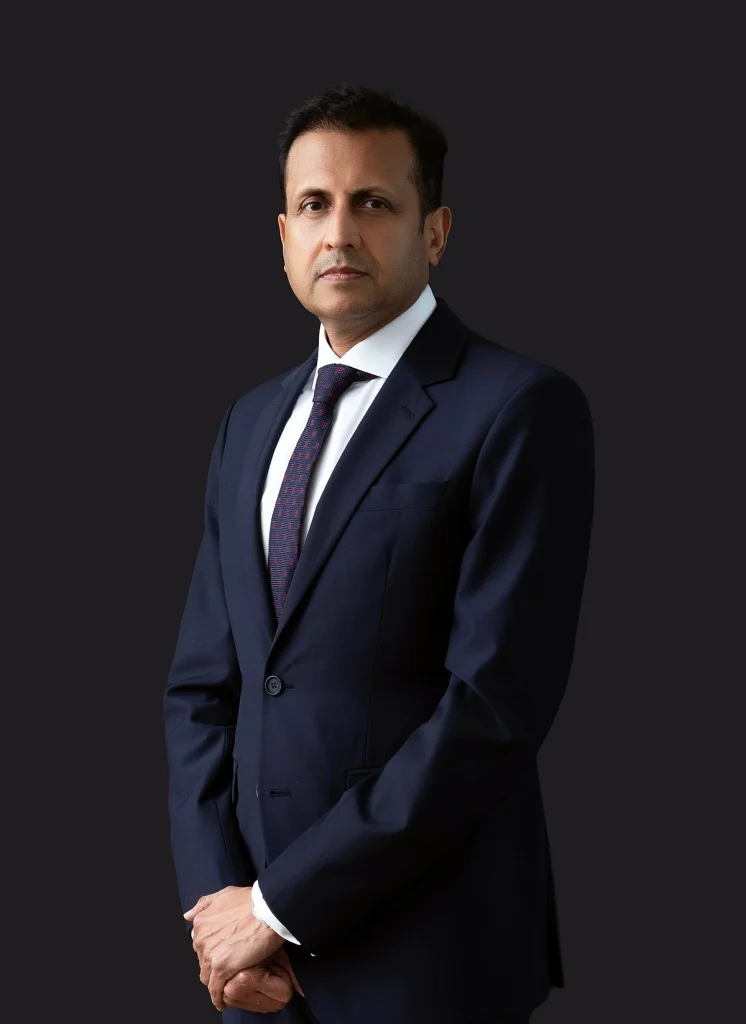
Ajay Rajendran arrived in Dubai in 2002 at a time when the emirate was entering one of the most consequential periods of urban and economic expansion in its history. He did not arrive with a completed business empire or a guaranteed route to success. His early career combined technical training, employment across Africa, an initial trading venture and years of experience in the UAE construction and property sector.
More than two decades later, Rajendran is the founder and chairman of Meraki Group, a Dubai-based enterprise with interests in real estate development, construction and premium international education. The group identifies him as its chairman, while its property business describes him as the founder responsible for directing its residential development and integrated contracting operations.
His rise reflects more than the growth of one entrepreneur. It illustrates how Dubai’s business environment can enable experienced operators to combine technical knowledge, international talent, investment capital and demand from a rapidly expanding population.
Meraki’s strategy is based on integration. Rather than relying entirely on outside companies to design, engineer and construct its developments, the group brings several functions together under one organisational structure. The stated objective is to maintain stronger control over delivery standards, construction quality and the customer experience.
Education represents the second major pillar. Meraki Education is involved in North London Collegiate School Dubai, whose governing body includes representatives nominated by the British school and Meraki Education. Ajay Rajendran is also identified as the owner and chairman of Meraki Group on the advisory board of Hartland International School.
The available public record supports the description of a diversified property, construction and education group. However, some performance figures in the original profile, including snagging rates, rental premiums, staff totals and student numbers, originate from the company or an interview-based feature and have not been independently audited in public filings.
Ajay Rajendran Built Meraki Around Integrated Execution
Rajendran’s approach to business is closely connected to his engineering background.
Meraki Developers describes him as a chemical engineering graduate with postgraduate training in business administration. Before establishing the wider group, he held a senior position at Sobha Group and was involved in major property development activity in Dubai.
This combination of technical and commercial experience shaped the model he later adopted at Meraki.
Property development is often highly fragmented. A developer may acquire land and appoint separate architectural, engineering, project-management and construction companies. Each organisation has its own responsibilities, commercial priorities and operating systems.
That arrangement can provide specialist expertise, but it may also create coordination problems.
Design decisions may not account fully for construction realities. Contractors may seek cost savings that affect finishes. Delays in one work package can interfere with several others. When defects emerge, the parties may disagree about responsibility.
Meraki’s integrated structure attempts to reduce those gaps by bringing development, engineering, construction and project delivery under connected management.
The approach does not automatically guarantee higher quality. Integrated companies can still face cost overruns, design errors or poor execution. Its advantage is that management has fewer organisational boundaries to cross when solving problems.
For Rajendran, control over the construction process appears central to the company’s value proposition.
The group is not seeking to compete solely through record-breaking towers or the highest possible luxury pricing. Its stated focus is on delivering well-designed residential products with dependable finishes, maintenance and practical value for occupants.
From Kerala and Gujarat to an International Career
Rajendran was born in Kerala and raised in Gujarat, according to the profile he gave Gulf News.
He grew up in a family familiar with business, which exposed him to entrepreneurship before he began his own career.
After studying chemical engineering and management, he worked in Cameroon and Ivory Coast for more than two years.
That period placed him in environments significantly different from the major cities in which he would later work.
Operating in remote or less developed areas can require managers to solve problems with limited infrastructure, fewer suppliers and smaller professional teams. It can also demand greater independence because technical and logistical support may not be immediately available.
Rajendran has described those African experiences as important to the development of his resilience and leadership approach.
His time on the continent is also relevant to his later work in Dubai.
The UAE’s economy connects businesses and professionals from Africa, Asia, Europe and the Middle East. Entrepreneurs who understand more than one market may be better prepared to manage multicultural teams, assess international opportunities and work with investors from different regions.
The African stage of Rajendran’s career did not create Meraki directly, but it contributed to the operating experience he later brought to the UAE.
Why Dubai Became the Platform for Growth
Rajendran moved to Dubai in 2002.
The emirate offered a combination of infrastructure, regional connectivity, population growth and a government strategy focused on attracting business and international investment.
His description of Dubai’s value is centred on scale.
An entrepreneur may have the same skills in different locations, but the market in which those skills are deployed can affect the size of the available opportunity.
Dubai offers access to international buyers, investors, companies and workers. It is connected through major airports and ports, while its free zones and business districts attract enterprises serving markets far beyond the UAE.
For a property developer, the city also offers a diverse customer base.
Residents may buy homes for personal occupation. International investors may seek rental income or long-term appreciation. Companies require housing for employees. Wealthy families may buy second homes, while entrepreneurs relocate to establish businesses.
Rajendran has argued that Dubai’s international reputation strengthens businesses operating from the city by creating confidence among customers and investors.
That confidence cannot replace operational performance, but it can reduce some of the barriers faced by companies based in less connected markets.
A developer established in Dubai can present projects to buyers across Asia, Europe, Africa and the wider Middle East. An education operator can attract families from many nationalities. A construction group can recruit talent from an international labour market.
Dubai therefore became more than Meraki’s physical location. It became part of the company’s commercial positioning.
From Food Trading to Real Estate
Rajendran’s initial business activity in Dubai was not property development.
He first entered food trading before moving into a senior role at Sobha Group, according to the source profile.
Trading and real estate appear very different, but both require disciplined cost management.
A trading company must purchase goods at viable prices, manage transport and inventory, understand customer demand and control operating expenses.
Real estate development involves larger and longer commitments, but the same fundamentals remain relevant.
Land must be purchased at a price that supports a viable project.
Construction expenses must be controlled.
Homes must be designed for a defined customer segment.
Selling prices must reflect both market demand and project costs.
Cash flow must be managed across several years.
Rajendran’s later period at Sobha gave him direct exposure to large-scale construction and development.
Meraki’s own company profile states that he served as co-chairman of Sobha Group until 2016 and was involved in projects including District One at Mohammed Bin Rashid City.
Experience within a major developer would have provided insight into procurement, engineering, design management, customer expectations and the operational complexity of delivering large communities.
It also gave him a clearer view of where an independent company might differentiate itself.
Establishing Meraki Group
Rajendran established Meraki Group in 2015, according to the original profile and subsequent company coverage.
The timing was important.
Dubai’s property market was already highly competitive. Established developers controlled major land holdings and possessed recognised brands, extensive sales networks and access to capital.
A new entrant needed more than attractive marketing.
Meraki’s answer was to build around execution and integration.
The group expanded through related businesses rather than treating property development as an isolated activity.
Construction and engineering capacity supported its residential projects.
Education created exposure to a sector with different revenue characteristics and demand drivers.
The resulting structure reduced total dependence on one property cycle, although the different divisions still require substantial capital and operational expertise.
Meraki describes its wider vision as creating high-quality communities that support the aspirations of families and individuals. Its public management information lists Rajendran as group chairman and identifies a dedicated management structure for the education business.
Meraki’s Integrated Property Model
The group’s property model seeks to connect the full development process.
That typically begins with identifying land and assessing market demand.
The developer then determines the most appropriate product, whether apartments, villas or another residential format.
Architects and engineers translate the commercial concept into a physical design.
Contractors procure materials, manage workers and construct the buildings.
Sales teams attract buyers, while handover and facilities-management teams take responsibility after completion.
Problems can emerge at every stage.
A commercially attractive design may be expensive to construct.
A visually impressive building may contain inefficient layouts.
Materials may look suitable in samples but perform poorly after installation.
A project may be completed technically but deliver a disappointing handover experience.
Meraki’s integrated model is designed to give one group greater influence across those stages.
This can allow the company to identify construction issues earlier and incorporate customer feedback into future developments.
It may also improve accountability because the developer cannot easily attribute every problem to an unrelated contractor.
However, integration increases responsibility.
When one group controls design, construction and delivery, failures across those functions ultimately return to the same leadership.
Rajendran’s business therefore depends heavily on internal management systems, technical teams and quality assurance.
Quality as a Commercial Strategy
The original profile describes quality as the central element of Meraki’s market position.
That is an important distinction because quality in property is not purely a design issue. It has direct financial implications.
A well-constructed building may experience fewer defects and lower long-term repair requirements.
Reliable facilities management can support tenant satisfaction.
Satisfied tenants may renew leases rather than moving.
Investors may accept higher purchase prices when they believe a developer’s buildings will retain their condition.
Resale buyers may also favour projects with strong maintenance records.
The profile stated that more than 73% of buyers in Meraki projects recorded no defects during pre-handover inspections and that its developments achieved rental premiums of as much as 25% over nearby properties.
Those figures could be commercially significant, but they appear to be company-reported and are not supported by a publicly available independent audit.
They should therefore be presented as Meraki’s own performance claims rather than neutral market findings.
The principle behind them remains valid.
Construction quality and building management can affect rental performance.
Two projects in the same location may achieve different rents because of maintenance, layouts, amenities, parking or the reputation of the landlord and developer.
For Meraki, the strategic objective is to make quality measurable through fewer defects, better resident experiences and stronger property performance.
The Haven and Nirvana Residences
The original profile points to The Haven series and Nirvana Residences as examples of Meraki’s residential strategy.
These projects represent the company’s attempt to provide premium features within market segments that are broader than ultra-luxury property.
Dubai’s luxury market receives significant international attention, but much of the city’s actual housing demand comes from professionals, families and investors seeking practical homes at more accessible price points.
This mid-market and upper-mid-market segment can be highly competitive.
Buyers compare layouts, location, payment plans, amenities, service charges and developer reputation.
They may be willing to pay more for quality, but only when the difference is visible and credible.
Meraki’s approach appears to emphasise design details, maintenance and the experience after handover rather than relying entirely on luxury branding.
That strategy could support recurring demand if completed projects perform well.
Property buyers frequently use a developer’s previous buildings as evidence when considering a new off-plan purchase.
A record of timely handovers and good maintenance can reduce perceived risk.
Poorly maintained earlier projects can have the opposite effect, regardless of the quality of new marketing.
Why Handover Is Only the Beginning
Many developers concentrate heavily on sales and construction but devote less attention to the period after buyers receive their homes.
For residents, however, handover begins the longest phase of the relationship.
They experience the building’s lifts, air conditioning, water systems, parking, security, cleaning and common areas every day.
A beautiful sales centre cannot compensate for repeated maintenance failures after occupation.
Rajendran’s position is that the developer’s promise should continue beyond completion.
That philosophy can create financial value when translated into effective facilities management.
Buildings with clean common areas, reliable equipment and responsive maintenance teams are generally more attractive to tenants and buyers.
The challenge is cost.
High-quality maintenance requires trained staff, spare parts, preventive inspections and disciplined service-charge management.
Developers and owners’ associations must balance operating standards with the fees paid by residents.
If charges become too high, investor yields can fall even when rents remain strong.
Meraki’s long-term reputation will therefore depend on both quality and cost efficiency.
The 2008 Crisis and the Case for Diversification
Rajendran’s career included the 2008 global financial crisis, which affected property markets, construction companies and financial institutions across the region.
Dubai’s real estate sector experienced cancelled projects, falling values and severe pressure on cash flow.
For entrepreneurs, the crisis demonstrated the risk of relying on continuously rising property demand.
Rajendran responded by considering sectors capable of providing longer-term stability.
Education became one of those sectors.
Schools differ from development projects in several important ways.
A residential development generates substantial revenue during sales and handover, but its development cycle eventually ends.
A school can produce recurring annual fee income while continuing to serve families over many years.
Demand is tied to population, household formation and the number of families relocating to a city.
However, education also involves substantial responsibility.
Schools must recruit qualified teachers, comply with regulation, maintain safeguarding standards and deliver academic outcomes.
Parents are not simply purchasing access to a building. They are entrusting an institution with their children’s development.
Diversification into education therefore reduced exposure to one property cycle but introduced a different form of operational complexity.
Building Meraki Education
Meraki Education developed partnerships with established international school brands rather than relying entirely on a new academic identity.
North London Collegiate School Dubai is an authorised International Baccalaureate school serving pupils from early years through Grade 12. Its official website says the Dubai institution combines the academic approach of the original British school with a full IB curriculum.
The school’s governance structure includes members nominated by NLCS in the United Kingdom and Meraki Education, confirming the group’s role in the institution’s development.
Meraki is also associated with Hartland International School.
Hartland follows the National Curriculum for England, while its advisory board identifies Rajendran as owner and chairman of Meraki Group.
The original profile also links the group with North London Collegiate School Singapore.
Together, these institutions give Meraki exposure to premium K-12 education in more than one international market.
The model depends on combining recognised academic brands with local investment and operations.
An overseas school name can attract interest, but brand recognition alone does not determine educational success.
Teachers, leadership, curriculum delivery, student support and governance remain essential.
Why International School Partnerships Matter
Creating a premium school from the beginning can be difficult.
A new institution has no academic history, alumni outcomes or established reputation among parents.
Partnering with a recognised school can reduce some of that uncertainty.
Parents may already understand the educational philosophy and standards associated with the original institution.
The partner can contribute curriculum guidance, teacher recruitment standards, governance and institutional experience.
The local operator contributes capital, facilities, regulatory knowledge and market access.
For Meraki, the partnership model connects its construction capabilities with an education business.
The group can participate in the design and delivery of school campuses while operating within an academic framework shaped by experienced education institutions.
This is another form of integration.
The property division creates homes and communities.
The education division provides a service required by families living in those communities.
The construction division can support the physical delivery of educational facilities.
Although the businesses remain distinct, they serve overlapping demographic demand.
Scale of the Education Business
The source profile states that Meraki’s schools collectively educate more than 5,500 students and employ over 900 teachers and staff.
Those numbers demonstrate the claimed scale of the education portfolio, but they were reported through an interview-based article rather than consolidated audited company disclosures.
The individual school websites confirm that the institutions are active, established operations.
NLCS Dubai serves pupils from pre-kindergarten through Grade 12 and operates a complete International Baccalaureate pathway.
Hartland International School provides an English-curriculum education and publishes information about its senior school, sixth form and graduates.
NLCS Dubai reported an average IB Diploma score of 36.8 for 2025 and said it had been positioned among the top-performing IB schools in the UAE. The ranking cited by the school originates from an external school-information platform rather than an official UAE government league table, so it should be described with that context.
The education division’s importance to Meraki extends beyond student numbers.
It diversifies the group’s revenue sources and creates long-term institutional relationships with families.
A school may serve a household for more than a decade as children progress through different year levels.
That makes trust, stability and reputation especially valuable.
Dubai’s Education Market
Dubai’s international school market reflects the emirate’s demographic structure.
The majority of residents are expatriates, and families seek curricula that align with university pathways and education systems in different countries.
The city offers British, American, Indian, International Baccalaureate and other programmes.
This variety creates strong demand but also intense competition.
Parents compare tuition fees, inspection results, examination outcomes, facilities, teacher quality, travel time and extracurricular activities.
Premium schools must justify their fees through more than elaborate campuses.
Academic outcomes and student wellbeing are essential.
The Meraki institutions compete in this environment with long-established school groups and new entrants.
Their international partnerships provide differentiation, but long-term success depends on consistent delivery in Dubai and Singapore rather than reputation inherited from partner names.
Leadership Through Operational Detail
Rajendran’s leadership style is described as highly involved.
The original profile says he monitors finishes, customer feedback and operational details across the group.
This approach can be valuable in businesses where quality is determined through many small decisions.
A property defect may result from a material specification, installation method or missed inspection.
A school’s reputation may be affected by communication, teacher recruitment or the handling of one family’s concern.
Leaders who remain connected to operations may identify emerging problems earlier.
However, direct founder involvement becomes harder as an organisation expands.
A group operating multiple developments, construction teams and international schools cannot rely on one person inspecting every detail.
Systems must eventually reproduce the founder’s expectations.
That requires documented standards, capable managers, internal audits and clear accountability.
The transition from founder-led quality control to institution-led quality control is one of the most important challenges facing growing private businesses.
Meraki’s ability to manage that transition will influence whether it can expand without weakening the standards on which its brand is based.
Resilience as a Business Principle
Rajendran’s advice to entrepreneurs emphasises persistence when the underlying business model remains sound.
That qualification is important.
Resilience does not mean continuing an unviable strategy indefinitely.
It means distinguishing between temporary difficulty and structural failure.
A sound business must serve customers, control costs and generate a credible path to profit.
When those fundamentals remain intact, external setbacks may justify patience rather than abandonment.
Rajendran has compared entrepreneurship to climbing in darkness without knowing how close the top may be.
The metaphor reflects the uncertainty founders face.
Revenue may take longer than expected.
Projects may encounter delays.
Economic cycles may weaken demand.
A founder has to decide whether to continue investing effort and capital despite incomplete information.
That decision should be supported by data, not optimism alone.
The relevance of Rajendran’s experience is that persistence was combined with diversification, technical knowledge and market adaptation.
Social Impact and Philanthropy
The original profile describes Rajendran’s intention to expand charitable work focused on education and nutrition.
One area of interest is supporting community kitchens capable of preparing large numbers of meals for schoolchildren in underserved areas of India.
Nutrition and education are closely linked.
Children who lack regular meals may struggle with attendance, concentration and learning.
Large community kitchens can support school-feeding programmes by producing food efficiently at scale.
However, meaningful philanthropic impact requires more than funding facilities.
Food safety, distribution, local partnerships, monitoring and reliable long-term financing are essential.
Rajendran’s stated ambition is to develop initiatives that continue beyond occasional donations and become durable institutions.
This mirrors his commercial preference for integrated and long-term systems.
The success of those plans will depend on implementation, transparency and measurable outcomes.
What Meraki’s Story Means for Dubai
Meraki’s development reflects several features of Dubai’s economic model.
The city attracts entrepreneurs with international experience.
It enables private companies to operate across related sectors.
Population growth supports demand for homes and schools.
Infrastructure connects the businesses to regional and global markets.
The city’s international identity also allows locally established companies to attract overseas buyers and partners.
However, Dubai does not guarantee success.
Its property and education markets are highly competitive.
Land, construction, staffing and marketing can be expensive.
Customers have access to many alternatives and increasingly expect transparency and quality.
Meraki’s growth therefore reflects both the opportunities provided by Dubai and the company’s ability to operate within a demanding market.
Rajendran’s story should not be reduced to the idea that location alone created success.
Dubai supplied the platform, while execution determined whether the opportunity could be converted into a sustainable enterprise.
Challenges Facing Meraki’s Next Phase
The group’s continued expansion presents several risks.
Dubai Property Competition
Numerous developers are launching projects across the city.
Buyers can compare payment plans, locations, amenities and pricing across a large market.
Meraki must continue demonstrating why its construction and maintenance standards justify customer trust.
Construction Cost Pressure
Material, labour and financing costs can change during long development cycles.
An integrated construction model provides control but also exposes the group directly to execution and cost risk.
Education Quality
School growth must not weaken teaching standards or student support.
Recruiting experienced teachers and leaders becomes more complex as the portfolio expands.
Brand Expansion
Entering additional sectors can diversify revenue but may reduce management focus.
Each business requires specialised governance and operating knowledge.
Founder Dependence
Rajendran’s personal involvement is presented as a strength.
Over time, the group must ensure that quality standards continue even when decisions are delegated.
Economic Cycles
Property remains cyclical.
Dubai’s market may experience periods of weaker sales, slower price growth or rising supply.
Diversification helps, but construction and education also require significant fixed investment.
What Comes Next for Ajay Rajendran and Meraki
The group plans to expand its property portfolio, introduce additional education ventures and consider other business sectors.
The exact scale, financing and timing of that expansion have not been disclosed publicly.
Future performance should be assessed using several indicators.
The first is project delivery.
Completed developments will show whether the group can maintain quality as its pipeline grows.
The second is customer satisfaction after handover.
Maintenance and occupancy performance will test whether the integrated model produces lasting benefits.
The third is academic delivery.
Student outcomes, school inspections, staff retention and parent demand will indicate the strength of the education business.
The fourth is governance.
A growing group requires independent management structures, transparent controls and succession planning.
The fifth is disciplined diversification.
New ventures should build on existing capabilities rather than relying only on the Meraki brand.
Expansion can create value when the businesses reinforce one another. It can destroy value when management enters industries without sufficient expertise.
Expert Analysis
Ajay Rajendran’s business strategy is defined less by rapid diversification than by the attempt to control quality across sectors where trust matters.
Property buyers commit substantial capital before they can fully judge the completed product.
Parents commit years of fees and place their children’s development in the hands of a school.
Both sectors involve long-term relationships and significant information gaps between the provider and the customer.
Meraki’s integrated model seeks to reduce those gaps through greater operational control.
In development, the company connects design, engineering and construction.
In education, it combines local investment and delivery with recognised international academic partners.
This approach can create a strong competitive position when it works.
It can also concentrate responsibility.
A company that controls more of the value chain cannot easily distance itself from defects, delays or service failures.
The strategy therefore depends on management depth and institutional discipline.
Rajendran’s technical background gives credibility to the focus on construction detail, while his experience through several economic cycles appears to have influenced the decision to diversify into education.
The most important test will come as the group scales.
Small and medium-sized companies can often maintain quality through direct founder oversight.
Larger organisations require systems capable of achieving the same result across many teams and locations.
Meraki’s future value will depend on whether it can transform Rajendran’s personal standards into repeatable company standards.
If it succeeds, the group could strengthen its position as an integrated UAE enterprise serving families through both homes and education.
If expansion moves faster than management capacity, the same integration that supports quality could make operational problems more difficult to contain.
Frequently Asked Questions
Who is Ajay Rajendran?
Ajay Rajendran is the founder and chairman of Meraki Group, a Dubai-based business with interests in real estate development, construction and premium international education.
When did Ajay Rajendran move to Dubai?
Rajendran moved to Dubai in 2002 after studying engineering and management and working in Cameroon and Ivory Coast.
When was Meraki Group established?
Rajendran established Meraki Group in 2015, according to the original profile and published company coverage.
What businesses does Meraki Group operate?
Its core interests include residential property development, integrated construction and premium K-12 education. The group’s official management page identifies separate leadership for its education operations.
Which schools are associated with Meraki?
Meraki Education is a development partner in North London Collegiate School Dubai, while Ajay Rajendran is identified as the owner and chairman of Meraki Group on Hartland International School’s advisory board.
What makes Meraki’s property model different?
The group brings development, design, engineering, construction and project delivery into a connected structure. The model is intended to provide closer control over quality, cost and customer experience.
Why does Ajay Rajendran credit Dubai for his growth?
He argues that Dubai’s infrastructure, international reputation, investor confidence and access to global talent allow entrepreneurs to pursue opportunities on a larger scale.
Conclusion
Ajay Rajendran’s journey from engineering and trading to the leadership of a diversified Dubai group demonstrates how technical experience, resilience and market selection can combine to create long-term business value.
Dubai provided an environment in which a founder could access international capital, talent, customers and established infrastructure.
Rajendran used that platform to build a group around two sectors closely connected to the needs of a growing city: housing and education.
Meraki’s real estate strategy is based on integrated execution and the belief that quality must continue beyond construction and sales.
Its education strategy relies on partnerships with established international institutions while building and operating schools for globally mobile families.
Both approaches are designed around trust.
Buyers must trust that promised homes will be delivered properly.
Parents must trust that schools will provide consistent teaching, safeguarding and opportunity.
The next stage of Meraki’s development will be determined by whether it can preserve that trust while expanding.
Founder involvement helped shape the group’s standards, but future scale will require those standards to become embedded in management systems, governance and organisational culture.
Rajendran’s story is therefore not simply about an entrepreneur benefiting from Dubai’s growth.
It is about recognising the city’s opportunities, building capabilities that matched its needs and continuing through periods when success was not guaranteed.
Dubai turned the opportunity into a global platform. Rajendran’s task was to convert that platform into institutions capable of lasting beyond one project, one property cycle or one generation of leadership.